
EU Energy Labels Explained – A Simple Guide for Smarter Appliance Buying
When buying a new appliance, energy labels are one of the most powerful tools available to consumers. They help you compare products quickly, understand long-term running costs, and choose appliances that are better for both your wallet and the environment.
This guide explains EU Energy Labels, what they mean, and how to use them when choosing appliances for your home.
What Are EU Energy Labels?
EU Energy Labels are mandatory labels found on many household appliances sold in Ireland and across Europe. They give clear, standardised information about:
- Energy efficiency
- Electricity consumption
- Noise levels
- Water usage (where applicable)
- Capacity and performance
Their purpose is simple:
👉 to help you make informed, energy-efficient choices.
🆕 The New A–G Energy Rating System
The latest EU energy labels use a simple A–G scale:
- A (Dark Green) – Most energy efficient
- G (Red) – Least energy efficient
🔴 A+, A++ and A+++ are gone
The old system became confusing as too many products sat at the top. The new scale is stricter and future-proof.
💡 Important:
A modern C-rated appliance may be more efficient than an older A+++ model due to improved testing standards.
QR Codes – Instant Product Information
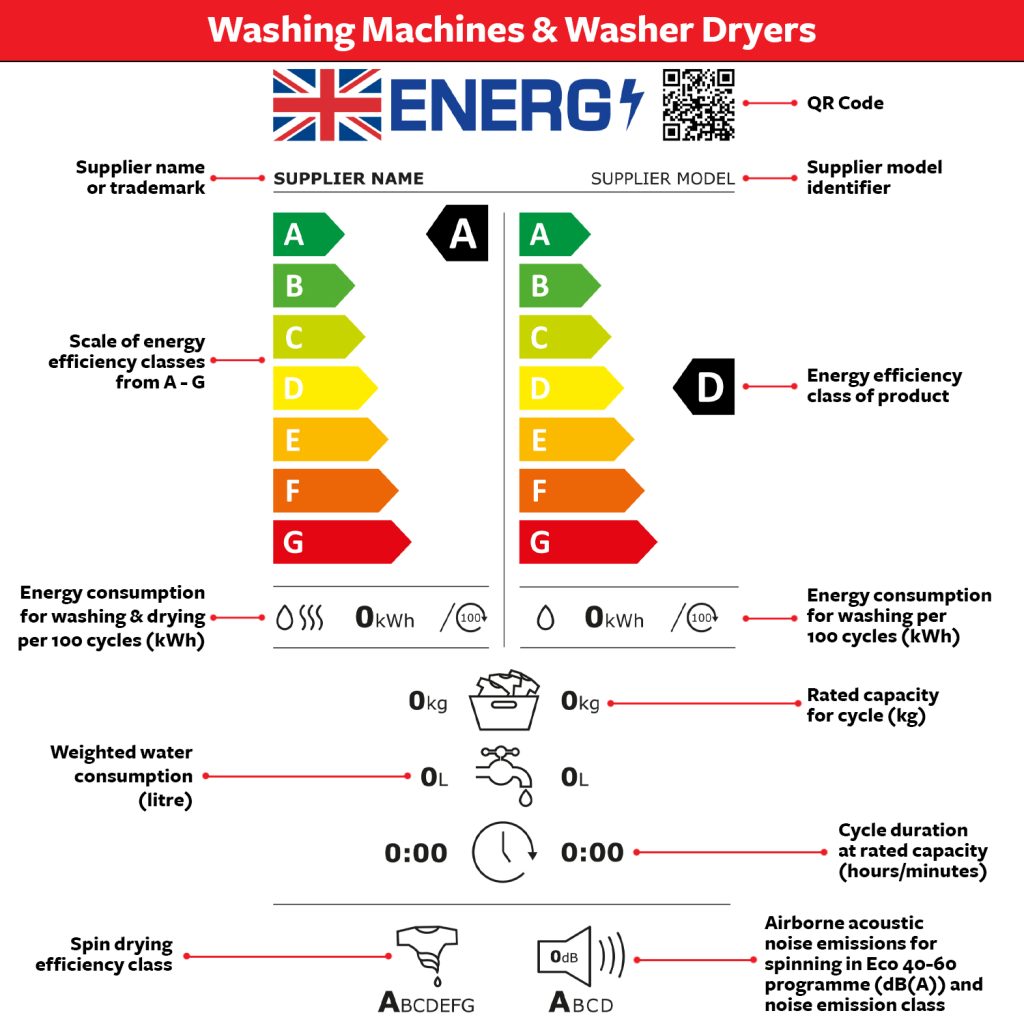
Every new energy label includes a QR code:
- Scan it with your phone
- Access the official EU EPREL database
- View detailed product specs, test results, and comparisons
This adds transparency and allows you to verify manufacturer claims instantly.
What Information Does an Energy Label Show?
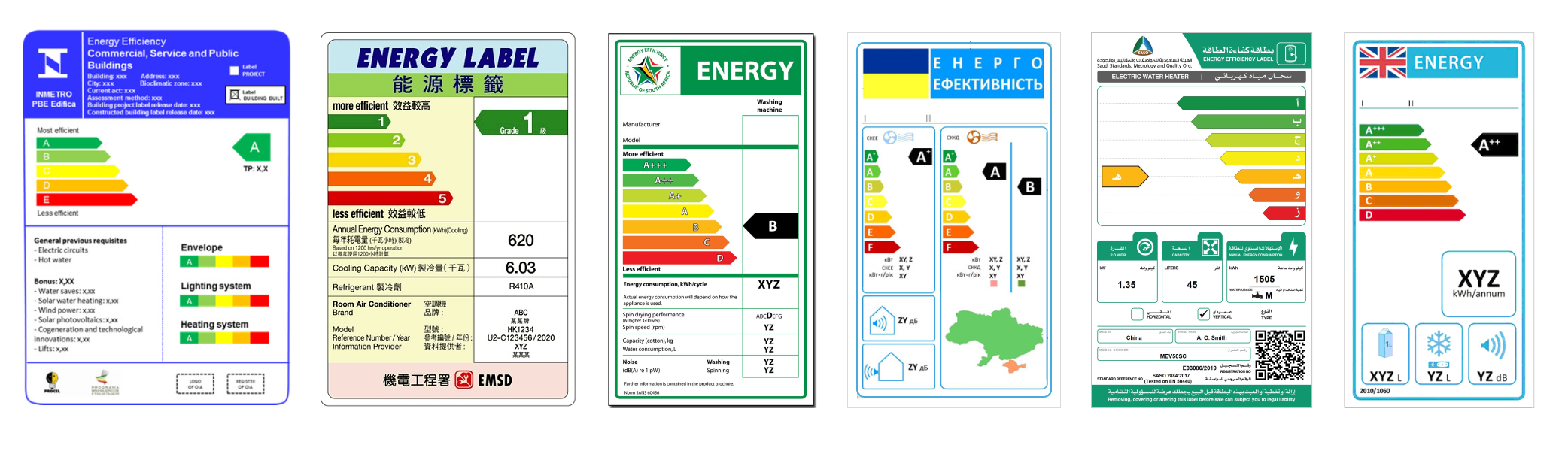
While labels vary slightly by appliance type, most include:
✔ Energy Efficiency Class
- The A–G rating at the top
✔ Energy Consumption
- Shown in kWh per year or per 100 cycles
✔ Noise Level
- Displayed in decibels (dB)
- Helpful for open-plan kitchens or utility rooms
✔ Capacity
- Fridges: litres
- Washing machines: kg
- Dishwashers: place settings
✔ Water Consumption
- Especially important for washing machines and dishwashers
Example: Washing Machine Energy Label Explained

A washing machine label typically shows:
- Energy use per 100 eco cycles
- Water consumption per cycle
- Spin efficiency
- Noise during spin cycle
💡 This helps you compare running costs, not just purchase price.
Which Appliances Use Energy Labels?
Energy labels apply to many common household products, including:
- Refrigerators & freezers
- Washing machines & washer dryers
- Dishwashers
- TVs & electronic displays
- Lamps and lighting products
More product categories continue to move to the updated label system.
How to Use Energy Labels When Shopping
🔍 Compare Like for Like
Only compare labels within the same appliance category.
📉 Don’t Panic Over Lower Letters
Early in the new system, A and B ratings are rare by design.
🔇 Check the Noise Rating
Especially important in kitchens, apartments, or open-plan homes.
💧 Look Beyond Energy
Water usage and capacity matter just as much for everyday running costs.
Why Energy Labels Matter
Choosing energy-efficient appliances can:
- Lower electricity bills
- Reduce water usage
- Improve comfort and noise levels
- Reduce environmental impact
Over the lifetime of an appliance, running costs often exceed the purchase price — making energy labels essential.
Final Thoughts
EU Energy Labels make appliance shopping clearer, fairer, and more transparent. By understanding how to read them, you can confidently choose products that offer better performance, lower costs, and long-term value.
When browsing appliances on tommiekelly.ie, always check the energy label — it’s one of the smartest decisions you can make.